
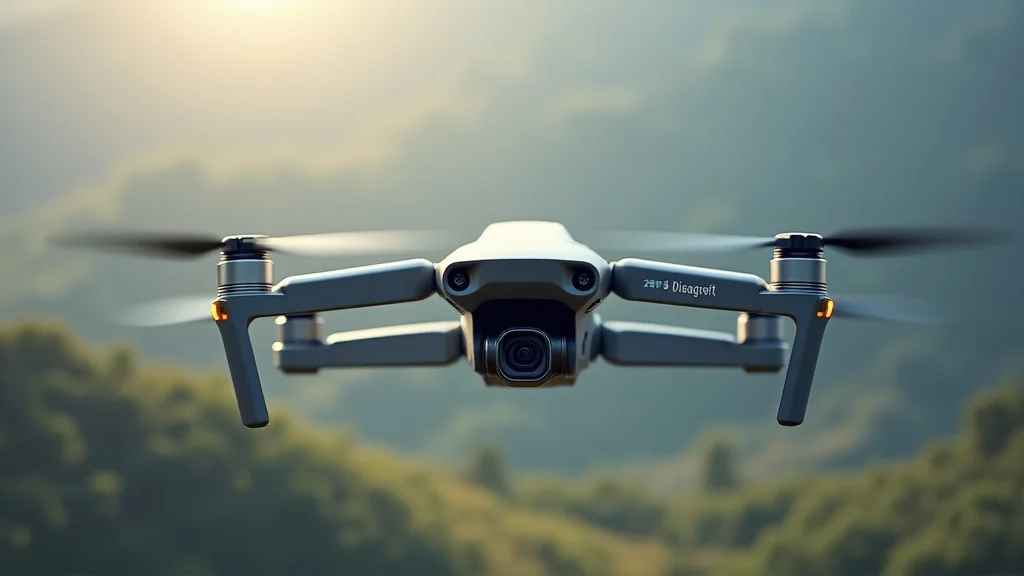
Picture this: you’re trying to capture stunning aerial footage of a bustling cityscape, or maybe you’re inspecting a wind turbine for damage. Standard drones, while capable, often struggle in windy conditions or with heavy payloads. Enter the world of the 6 rotor drone! In this blog post, we’ll explore everything you need to know about these amazing machines. You’ll gain a solid grasp of how they work, their advantages, and their various applications. By the end, you’ll be able to differentiate between various types of 6 rotor drones and their use cases. You will be able to determine if this drone is a good fit for your needs.
Key Takeaways
- Learn about the fundamental mechanics and design of a 6 rotor drone.
- Discover the key advantages of a 6 rotor configuration over other drone designs.
- Explore various applications of 6 rotor drones across different industries.
- Understand the factors that influence the selection of a 6 rotor drone.
- Compare and contrast different models and their performance characteristics.
- Get some guidance on how to safely and effectively operate a 6 rotor drone.
Unpacking the 6 Rotor Drone: Design and Functionality
The 6 rotor drone, or hexacopter, stands out from the more common quadcopter (four rotors) due to its unique design. This configuration offers significant advantages, primarily related to stability, payload capacity, and redundancy. It operates on the principle of distributed lift, where each rotor contributes to the overall thrust needed for flight. This design allows for smoother and more controlled movements, especially in challenging environments. Let’s explore the core components that make these drones so effective, from the motors to the flight control systems.
The Anatomy of a Hexacopter
A hexacopter’s effectiveness stems from its intricate design. These drones consist of six individual rotors, each powered by an electric motor. These motors are precisely controlled by an electronic speed controller (ESC) which regulates their speed. The ESCs are driven by the drone’s central processing unit, the flight controller. This brain receives information from various sensors like the Inertial Measurement Unit (IMU), which includes accelerometers and gyroscopes. This lets the drone know its orientation, acceleration, and movement in all three axes. GPS modules provide location data, allowing for automated flight modes and accurate positioning. The body, often made of lightweight but durable materials like carbon fiber, houses all these components and provides a mounting platform for payloads.
- Rotor Configuration: The placement and direction of the rotors are key. The rotors are typically arranged in a symmetrical pattern, with three rotors spinning clockwise and the other three counter-clockwise. This layout cancels out the torque created by the spinning rotors, maintaining stability.
- Motors and ESCs: High-performance electric motors and efficient ESCs are critical for power and control. Brushless DC motors are commonly used due to their power and durability.
- Flight Controller: This is the drone’s brain, responsible for interpreting sensor data and controlling the motors. Advanced flight controllers use algorithms like PID (Proportional-Integral-Derivative) control for stable flight.
- GPS and Navigation Systems: These systems provide accurate positioning, enabling autonomous flight modes and return-to-home functions.
- Payload Capacity: The construction should support additional equipment, cameras, or specialized sensors. This is a critical factor for professional applications.
The placement and direction of the rotors in a 6 rotor configuration are engineered for balance and optimal performance. Typically, the rotors are positioned symmetrically around the central body of the drone. Three rotors will spin clockwise, while the other three turn counter-clockwise. This arrangement cancels out the torque that is generated by the spinning rotors, which improves stability and control of the aircraft.
The motors, often brushless DC motors, are chosen for their efficiency, power output, and lifespan. The ESCs, or Electronic Speed Controllers, act as the intermediaries between the flight controller and the motors. They take commands from the flight controller and adjust the speed of each motor to control the drone’s movement. These controllers handle the power demands of the motors, enabling smooth and responsive flight. They also provide protection against overheating and overcurrent situations, ensuring the safety of the drone and its components.
The flight controller is the central processing unit of the drone, responsible for interpreting sensor data and issuing commands to the motors. It uses algorithms like PID (Proportional-Integral-Derivative) control to stabilize and steer the drone. This system receives information from the IMU (Inertial Measurement Unit), which uses accelerometers and gyroscopes to determine the drone’s orientation and movements in all three axes. Using this information and the pilot’s commands, the flight controller then calculates the correct motor speeds to maintain or adjust the drone’s position.
GPS and other navigation systems are essential for the drone’s operational capabilities. They enable the drone to precisely determine its location, allowing for autonomous flight modes such as waypoints, orbit, and follow-me. Furthermore, these systems are critical for features like Return-to-Home, which automatically brings the drone back to its takeoff point. They also help maintain stability in windy conditions by constantly correcting the drone’s position and orientation. These functions enhance the user experience and expand the possible applications of 6 rotor drones.
The payload capacity of a hexacopter is a crucial factor, especially for professional or commercial usage. This refers to the weight that a drone can carry, including cameras, sensors, and other equipment. A higher payload capacity means the drone can support heavier or more complex equipment, which in turn broadens its applications. This can significantly influence factors such as the quality of aerial photography or the efficiency of inspection tasks. A higher payload capacity gives greater flexibility to adapt to different tasks and scenarios.
The Physics of Flight
The principle behind hexacopter flight is relatively straightforward, yet powerful. By adjusting the speed of each rotor, the flight controller can manipulate the drone’s movement in all directions. Increasing the speed of all rotors lifts the drone, while reducing their speed causes it to descend. Tilting the drone by varying the speed of rotors on one side causes horizontal movement. The counter-rotating rotors cancel out the torque, eliminating the need for a tail rotor, which is typical of helicopters. This design also provides a level of inherent stability.
- Lift Generation: The rotors generate lift by pushing air downwards, creating an upward force. The amount of lift generated depends on the rotor speed and the size of the rotors.
- Torque and Counter-Torque: The counter-rotating rotors balance the torque, preventing the drone from spinning uncontrollably.
- Flight Control Algorithms: Sophisticated algorithms use sensor data to adjust rotor speeds and maintain stability. PID control is a common approach.
- Aerodynamic Considerations: The design of the drone’s frame and the rotor blades affects its efficiency and performance. Aerodynamic principles help minimize drag.
Lift is generated by the rotors of the 6 rotor drone and is a product of their rotation. Each rotor pushes air downwards, creating an equal and opposite force that lifts the drone upward. The amount of lift produced is directly linked to the speed of the rotors and the size of the rotors. As the rotors spin faster, they displace more air, increasing the lifting force. The larger the rotors, the more air they can move, and the more lift they generate, allowing the drone to carry heavier payloads or maintain stability in gusty conditions.
When the rotors spin, they produce a torque reaction, which tries to make the drone spin in the opposite direction. In a 6 rotor drone, the counter-rotating rotors play a significant role in balancing this torque. Half of the rotors spin clockwise, and the other half spin counter-clockwise. This configuration creates a counter-torque effect that cancels out the rotational forces. This design helps maintain the drone’s orientation and stability during flight.
Flight control algorithms are essential for the stable and precise flight of 6 rotor drones. These algorithms utilize data from various sensors like accelerometers, gyroscopes, and GPS to constantly adjust the speed of each rotor. A widely used algorithm is PID (Proportional-Integral-Derivative) control. This algorithm makes sure the drone remains stable, manages the effect of wind gusts, and enables smooth, controlled movements. The system calculates the error between the desired state and the current state, and makes adjustments accordingly. This technology is vital for both autonomous flight features and operator control.
The design of the frame and the rotor blades greatly influences the drone’s efficiency and performance. Streamlining the frame reduces drag, helping the drone to fly faster while using less power. The rotor blades are typically designed with specific airfoil profiles. These profiles help in generating optimal lift and decreasing drag, allowing the drone to fly longer and carry heavier loads. Careful consideration of these aerodynamic aspects plays a key part in the overall design, maximizing both the drone’s flight time and its payload capacity.
Advantages of a 6 Rotor Configuration
The 6 rotor drone offers several distinct advantages over other drone designs, such as quadcopters and single-rotor helicopters. These benefits include improved stability, enhanced payload capacity, and increased redundancy. These advantages make the hexacopter a popular choice for various commercial and professional applications. The configuration can perform tasks that are beyond the scope of drones with fewer rotors.
Superior Stability and Control
The six-rotor setup provides excellent stability in various conditions. The extra rotors provide increased control authority, which can be useful when dealing with external disturbances like wind. This enhanced control is critical when capturing high-quality aerial photography or performing precise inspections.
- Resistance to Wind: The 6 rotor configuration maintains stability in windy conditions.
- Smooth Flight: The multiple rotors contribute to smoother flight, minimizing vibrations.
- Precise Maneuverability: The extra rotors allow for precise adjustments and maneuvers.
Hexacopters are inherently more stable in windy conditions when compared to drones with fewer rotors. This is mainly due to the redundant design, where additional rotors can counteract the effects of wind gusts. When one rotor is affected by the wind, the other five rotors can compensate, maintaining the drone’s altitude and orientation. This increased stability is invaluable for aerial photography, inspections, or other tasks where precise positioning is a must.
The 6 rotor configuration results in smoother flight characteristics, which reduces vibrations. The balanced distribution of lift, coupled with the sophisticated flight control systems, helps to dampen any oscillations or disturbances. This smooth and stable flight environment is crucial for capturing high-quality aerial footage, where even slight vibrations can ruin the final output. It is also beneficial for tasks like thermal inspections, where steady flight is necessary to obtain accurate data.
6 rotor drones boast exceptional maneuverability, allowing for precise flight control. The extra rotors allow for more granular control over the drone’s movements in all three axes: pitch, roll, and yaw. Pilots can make nuanced adjustments to the drone’s flight path, such as adjusting the altitude or changing the direction without affecting overall stability. This level of control is necessary for tasks like filming moving subjects or navigating tight spaces.
Enhanced Payload Capacity
One of the significant advantages is the ability to carry heavier payloads compared to quadcopters. This capacity allows for the use of more advanced equipment. This is a crucial factor for applications that involve carrying high-resolution cameras, specialized sensors, or additional equipment. For many professional tasks, the ability to lift a larger payload is a requirement.
- Higher Payload Weight: Hexacopters can lift heavier payloads, accommodating more equipment.
- Compatibility with Advanced Equipment: They support the use of larger cameras, sensors, and other specialized devices.
- Scalability: The design can be scaled up to carry even larger payloads.
The 6 rotor drone’s primary advantage is its increased payload capacity. The configuration allows the drone to carry significantly more weight than many other drone types. The ability to lift heavier payloads is important for applications like aerial photography with professional-grade cameras, surveying with specialized sensors, or delivering items. This increased payload capacity broadens the scope of tasks that the drone can handle, making it a versatile platform for many different applications.
Due to their enhanced payload capacity, the 6 rotor configuration supports a diverse array of advanced equipment. The drone can be equipped with large, high-resolution cameras for filming, or specialized sensors for surveying and mapping. This flexibility enables the use of cutting-edge technology for precise data collection. This enables a wider variety of professional applications, from construction site monitoring to environmental analysis.
The design of the 6 rotor drone allows for scalability, making it suitable for a variety of tasks. The configuration can be adapted to lift even heavier payloads. Through adjustments in motor size, battery capacity, and frame design, 6 rotor drones can be adjusted to meet specific payload needs. This scalability makes them a flexible option for an array of commercial and industrial applications.
Improved Redundancy and Safety
The 6 rotor design provides a significant safety feature: redundancy. If one motor fails, the remaining five motors can often maintain stable flight, allowing for a safe landing. This feature is particularly valuable in commercial and industrial applications where safety is a primary concern. The added security reduces the risk of accidents and equipment loss.
- Operational Safety: Redundancy means that if one motor fails, the drone can continue flying.
- Risk Mitigation: This minimizes the risk of crashes due to motor failure.
- Emergency Landing Capabilities: The system allows for a controlled descent in the event of a failure.
Redundancy is a key safety feature that makes 6 rotor drones safer. If one of the six motors fails, the remaining five motors can often continue to operate, allowing the drone to maintain stability and make a controlled landing. This extra layer of security reduces the chance of a crash due to mechanical failure and is crucial in environments where safety is paramount, such as near people or valuable infrastructure.
The redundancy feature significantly lowers the risk of crashes due to motor failure, providing a significant safety advantage. This feature becomes particularly valuable in missions where a sudden motor malfunction could lead to loss of the drone, payload, or even pose a danger to those below. This safety factor is a major factor for industrial, commercial, and research applications.
In the event of a motor failure, the design of a 6 rotor drone is able to facilitate a controlled descent to a landing, enhancing safety. The flight control system can adapt, using the remaining motors to safely reduce the drone’s altitude. The drone can land in a designated area or attempt to return to its takeoff point. This functionality enhances the safety of the drone and minimizes the potential for damage to the drone, its payload, or surroundings.
Applications of 6 Rotor Drones in Various Industries
The versatility of the 6 rotor drone is evident in its many applications across various industries. From aerial photography and videography to inspection and surveying, these drones offer a range of capabilities that improve efficiency and outcomes. The ability to carry larger payloads and maintain stability makes them valuable tools in professional environments.
Aerial Photography and Videography
The 6 rotor drone is a favorite tool for professional filmmakers and photographers. Its stability and ability to carry high-quality cameras allow for the capture of stunning aerial footage. The smooth flight characteristics result in professional-grade videos and photos.
- Professional Film Production: High-quality aerial shots are possible with professional-grade cameras.
- Real Estate Photography: Aerial images are used to showcase properties, and offer a better perspective.
- Event Coverage: They are used for capturing event coverage, offering unique perspectives.
In professional film production, 6 rotor drones are indispensable tools for capturing high-quality aerial shots. The capability to carry professional-grade cameras and lenses opens up creative possibilities for capturing dynamic, immersive footage. These drones can be used to film sweeping landscapes, action sequences, or intricate architectural designs. The stability of the 6 rotor design ensures that the footage remains smooth and shake-free. It delivers professional quality.
In real estate, 6 rotor drones are used to capture aerial photographs and videos that showcase properties in their best light. These visuals provide potential buyers with a better perspective of the property and its surroundings. The drone can be used to capture panoramic views, highlight features such as landscaping, and demonstrate the proximity to local amenities. By delivering stunning visuals, these drones can significantly improve the marketing of real estate.
6 rotor drones are widely used for event coverage, delivering unique aerial perspectives. The drones offer a comprehensive view of events, capturing the scale of festivals, concerts, and sports games. Using these drones, you can capture dynamic shots that enhance the storytelling of the event. Their ease of setup and ability to provide a live feed allows for real-time coverage. This makes them a useful tool for event organizers and media outlets.
Inspection and Monitoring
The 6 rotor drone is used to inspect infrastructure, monitor crops, and assess other areas. Its stability, combined with its ability to carry specialized sensors, makes it ideal for these types of jobs. This can reduce the time and costs associated with inspections.
- Infrastructure Inspection: Drones inspect bridges, power lines, and other infrastructure.
- Agricultural Monitoring: They assess crop health, water usage, and other vital factors.
- Security and Surveillance: Drones patrol perimeters, monitor activities, and provide situational awareness.
6 rotor drones play an important role in infrastructure inspection, offering a safe and cost-effective approach to monitoring bridges, power lines, and other critical infrastructure. Equipped with high-resolution cameras and sensors, these drones can detect damage, identify potential risks, and assess the condition of structures without putting human inspectors at risk. This method often speeds up the inspection process and ensures that repairs are made promptly, mitigating potential safety hazards and reducing maintenance expenses.
In agriculture, the 6 rotor drone is used for monitoring crop health, water usage, and other vital aspects. Using multispectral cameras, the drones can collect data on plant stress levels, identify diseases, and evaluate the efficiency of irrigation systems. This data-driven approach gives farmers valuable insights, helping them make more informed decisions about resource management, pest control, and yield optimization. It helps boost productivity and minimize environmental impact.
6 rotor drones are increasingly used for security and surveillance, offering a flexible and effective means of patrolling perimeters, monitoring activities, and improving situational awareness. Equipped with high-resolution cameras and thermal sensors, these drones can detect unusual activity, identify potential threats, and provide real-time surveillance data. Their ability to fly in challenging environments makes them useful for security applications like border patrols, securing sensitive infrastructure, and protecting large properties.
Surveying and Mapping
Surveyors use 6 rotor drones for a range of tasks, from creating detailed maps to performing 3D modeling. The accuracy and efficiency that these drones offer have changed the surveying and mapping landscape. They reduce both the time and resources needed for these tasks.
- Topographical Mapping: Drones capture terrain data, generate accurate maps, and measure elevations.
- 3D Modeling: They create detailed 3D models of structures and landscapes.
- Environmental Monitoring: They collect data on environmental conditions and changes.
6 rotor drones are extensively used in topographical mapping, offering a quick and efficient way to capture terrain data and generate highly accurate maps. By using GPS and advanced photogrammetry techniques, the drones can create detailed 2D and 3D models. This is useful for construction projects, environmental management, and urban planning. This method significantly reduces the time and expense associated with traditional surveying methods.
The use of 6 rotor drones allows for creating detailed 3D models of structures and landscapes. By combining photogrammetry techniques with the ability to capture aerial imagery, these drones create accurate 3D representations of physical spaces. These models have uses for architecture, engineering, and construction. They help visualize projects, assess conditions, and calculate volumes with great precision. This improves project planning and the ability to make data-driven decisions.
6 rotor drones are valuable for environmental monitoring, offering a cost-effective and flexible way to collect data on environmental conditions and changes. Equipped with various sensors, drones can monitor vegetation health, track wildlife populations, and assess pollution levels. This data is essential for environmental research, conservation efforts, and policy-making. This technology provides an accessible platform for studying and protecting the environment.
Selecting the Right 6 Rotor Drone for Your Needs
Choosing the right 6 rotor drone is an important decision. Several factors need to be considered. These considerations range from the payload capacity and flight time to the required level of camera and the drone’s software features. This helps to choose a drone that meets specific operational demands.
Key Features to Consider
When selecting a 6 rotor drone, several features require close attention to make sure you have the right equipment for your purpose. Payloads, flight times, and camera quality, are among these features. This will influence its usefulness, and the results it delivers.
- Payload Capacity: Make sure the drone can carry the equipment (cameras, sensors, etc.) you need.
- Flight Time: Longer flight times allow more time for data collection and operations.
- Camera Quality: The camera specifications will impact the quality of the videos and photos you take.
- Flight Range: The distance the drone can travel will influence the area it can cover.
- Safety Features: Features like obstacle avoidance and return-to-home are essential.
Payload capacity is a crucial factor to consider when choosing a 6 rotor drone, making sure it can carry the equipment you require. This includes cameras, sensors, and any other specialized gear. Consider the weight of your payload and choose a drone that offers sufficient capacity. This will give you the flexibility to adapt to a variety of jobs. A higher payload capacity often allows for the use of more sophisticated equipment, resulting in higher-quality data collection and images.
Flight time, or how long the drone can stay in the air on a single charge, is a critical factor for a 6 rotor drone. Longer flight times improve productivity by providing more time for data collection and aerial operations. Depending on the task, a long flight time is a key factor in drone selection, making sure you can complete the work without needing to interrupt the mission to swap batteries. Consider how much flight time you require for specific project tasks.
Camera quality has a direct impact on the quality of videos and photos taken by the drone. The camera specifications include resolution, sensor size, and the lens. The higher the resolution, the more detail you’ll capture in your footage. A larger sensor will gather more light, leading to better low-light performance. Choose a camera with specs that fit your project goals, from cinematic videos to precise data capture.
The flight range of a drone, or the distance it can travel from the remote controller, plays a critical role in the operation’s effectiveness. This influences the area that the drone can cover in a single mission. A longer flight range enables operations over larger properties or in open areas. Consider the types of missions you will conduct, and choose a drone that has a flight range that accommodates those needs.
When selecting a drone, make sure the safety features match your requirements. Obstacle avoidance systems use sensors to help the drone detect and steer clear of objects in its flight path, decreasing the chance of crashes. The Return-to-Home feature automatically guides the drone back to its takeoff location. Consider safety features to help ensure your drone’s safe and reliable operation.
Comparing Different Models
The marketplace has a variety of 6 rotor drone models. When comparing different models, consider factors such as payload capacity, flight time, camera quality, and price. Some drones are created for aerial photography, while others are built for industrial applications. Research the features and capabilities of each drone. Make sure it suits your specific project needs.
| Feature | Drone A | Drone B | Drone C |
|---|---|---|---|
| Payload Capacity | 5 kg | 8 kg | 10 kg |
| Flight Time | 30 minutes | 45 minutes | 40 minutes |
| Camera Quality | 4K/30fps | 6K/30fps | 8K/30fps |
| Price | $5,000 | $8,000 | $12,000 |
| Applications | Aerial Photography | Inspection, Surveying | Heavy-duty applications |
This is a quick overview of how you might compare different models. The table lists different features, such as payload capacity, flight time, and camera quality, for three hypothetical 6 rotor drone models. The table allows for a clear comparison of the capabilities. It highlights the main differences between the drones. This information will help you select the best drone for your specific needs.
- Model A: Great for aerial photography due to its good camera and cost-effectiveness.
- Model B: Suited for inspection and surveying. It offers high payload capacity and good camera quality.
- Model C: Best for heavy-duty uses because it has a high payload capacity and high-quality camera.
Model A is an attractive choice for aerial photography and videography because of its balance of functionality and affordability. The model’s 4K camera and 30-minute flight time provide users with a good tool for shooting detailed aerial footage. This drone is perfect for real estate, event coverage, or hobbyist purposes.
Model B is built for inspection and surveying tasks. It has a high payload capacity (8 kg) and a 6K camera, making it appropriate for carrying sensors and tools necessary for such tasks. Its longer flight time (45 minutes) allows for more efficient data collection. The balance of attributes make it a good option for professionals who need precise data capture.
Model C is built for heavy-duty applications, with a payload capacity of 10 kg, and it’s capable of carrying heavy equipment. This is a solid option for industrial applications, for things such as construction or inspection of large infrastructure. Its 8K camera also makes it capable of high-detail data collection, providing a robust solution for demanding jobs.
Regulatory Compliance and Legal Considerations
Before operating a 6 rotor drone, you must understand the rules and regulations. This will make sure you operate safely and legally. This involves obtaining the necessary licenses and permits. Also, you must adhere to restrictions. Following the rules helps to avoid accidents and legal issues.
- FAA Regulations: Adhere to the Federal Aviation Administration (FAA) regulations for drone operation.
- Local Regulations: Be aware of local laws and ordinances.
- Privacy Considerations: Respect privacy and avoid capturing images without consent.
The Federal Aviation Administration (FAA) regulates drone operation in the United States. You must comply with their guidelines to ensure safety and legality. This involves registering the drone, obtaining a Remote Pilot Certificate (Part 107 license) if you plan to use it for commercial purposes, and following all operational rules. This will ensure that you comply with all legal requirements and can fly your drone safely and responsibly.
Besides national FAA regulations, it’s essential to be aware of and follow local laws and ordinances that may impact drone operations. Local governments may impose their own restrictions on where and when drones can fly. This may include restrictions near airports, parks, or populated areas. Reviewing local guidelines guarantees that you are acting in accordance with the law.
Drones are able to capture images and video of private property and persons. It is vital to take privacy into account. Avoid flying over private property without consent, and be careful when you record footage of individuals. This often includes obtaining permission before recording or using data that could infringe upon a person’s privacy rights. Complying with privacy regulations shows respect for personal boundaries.
Common Myths Debunked
There are several myths about the 6 rotor drone. It’s important to debunk these misconceptions. Separating fact from fiction lets potential users make informed decisions about drone usage.
Myth 1: 6 Rotor Drones Are Always the Best Option
This is not necessarily the case. While hexacopters offer advantages, they aren’t always the ideal choice for every application. Quadcopters, for instance, might be more cost-effective and suitable for simpler tasks. Helicopters can perform specific jobs that cannot be done with hexacopters.
Myth 2: 6 Rotors Are Automatically More Difficult to Operate
This is untrue. Modern flight controllers and software have made 6 rotor drones easy to handle. Many have automated flight modes and features that make operation straightforward for both beginners and experienced pilots.
Myth 3: More Rotors Mean Longer Flight Times
In practice, flight time is influenced by various factors, including battery capacity, motor efficiency, and payload weight. A 6 rotor drone may not always have a longer flight time than a quadcopter. They often have shorter flight times because of the increased power demands of more rotors.
Myth 4: Hexacopters are Unsafe and Prone to Crashes
Hexacopters are inherently safer than other drone types. The redundancy provided by the six-rotor design lets the drone stay in flight with a failed motor. In fact, due to the safety features and advanced technologies, they are safer. Proper operation and maintenance reduce the risk of crashes.
Myth 5: 6 Rotor Drones Are Only for Professionals
This isn’t necessarily true. While they are a favorite among professionals, 6 rotor drones are designed with a range of operators in mind. Many models offer user-friendly features, and are suitable for hobbyists and beginners. They vary in price and complexity, with options for all levels of experience.
Frequently Asked Questions
Question: What is the primary advantage of a 6 rotor drone?
Answer: The main advantage is its enhanced stability, payload capacity, and redundancy, which makes it suitable for various tasks and challenging environments.
Question: How do 6 rotor drones differ from quadcopters?
Answer: 6 rotor drones have six rotors, offering greater stability, and a higher payload capacity compared to quadcopters, which have only four rotors.
Question: What are some practical applications of 6 rotor drones?
Answer: They are used for aerial photography, infrastructure inspection, surveying, mapping, agricultural monitoring, and security/surveillance.
Question: Are 6 rotor drones difficult to operate?
Answer: Modern 6 rotor drones are designed with user-friendly features, and many have automated flight modes, making them accessible to pilots of various skill levels.
Question: What are the key considerations when choosing a 6 rotor drone?
Answer: Key factors include payload capacity, flight time, camera quality, safety features, and compliance with local regulations and laws.
Final Thoughts
The 6 rotor drone offers a compelling blend of stability, payload capacity, and reliability. This makes it a great choice for various jobs. Its design provides superior stability in windy conditions, and the redundancy allows for safer operation. From aerial photography and videography to inspection and surveying, its applications are expansive. When selecting a hexacopter, remember to prioritize the payload capacity, flight time, camera quality, and safety features. By knowing the technology and its benefits, you are equipped to make decisions. With careful consideration and a commitment to safe operation, the 6 rotor drone is a powerful tool. You can explore new possibilities with this innovative technology and push the boundaries of aerial capabilities. Consider its advantages to find if it fits your specific demands.