
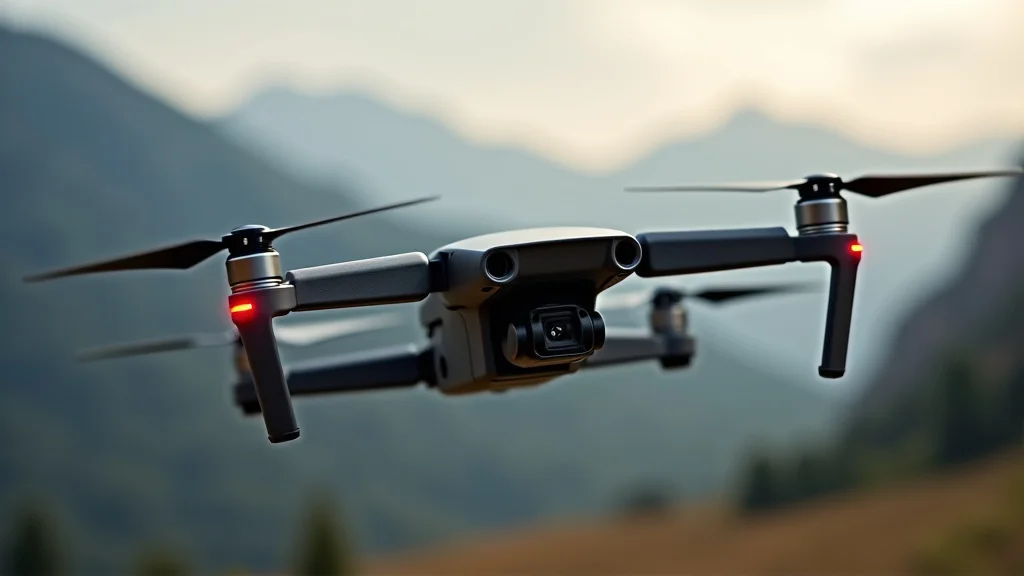
Picture this: You’re at a stunning landscape, drone in hand, ready to capture breathtaking aerial footage. But instead of a smooth flight, your drone struggles against the wind or lacks the stability needed for perfect shots. This is where the 8 propeller drone comes into play, offering enhanced performance and control. This post is your comprehensive guide to the world of drones with eight propellers, exploring their advantages, how they work, and what makes them a superior choice for various applications. By the end, you’ll gain a solid grasp of this technology and discover whether an 8 propeller drone is right for you. Get ready to explore the exciting possibilities this technology brings, improving your knowledge and decision-making when choosing a drone.
Key Takeaways
- Learn the benefits of having eight propellers on a drone.
- Explore the mechanics of how 8 propeller drones operate, including flight stability and control.
- Understand the different applications where these drones excel.
- Compare 8 propeller drones with those that have fewer propellers.
- Identify factors when picking an 8 propeller drone.
- Gain valuable insights and improve your drone-flying skills.
The Mechanics of an 8 Propeller Drone
An 8 propeller drone, often referred to as an octocopter, represents a significant upgrade from drones with fewer propellers, such as quadcopters (4 propellers) or hexacopters (6 propellers). The addition of extra propellers has a direct impact on the drone’s flight characteristics, stability, and overall performance. These drones are engineered for professional applications, including photography, surveying, and industrial inspections, where reliability and performance are essential. The design uses eight propellers arranged symmetrically, each driven by its own motor. These motors are precisely controlled by the drone’s flight control system, which continuously adjusts their speed and direction to maintain stability and execute flight maneuvers.
Flight Stability and Control
The primary advantage of an 8 propeller drone lies in its enhanced flight stability. The presence of eight propellers provides multiple points of lift and control, making the drone less susceptible to disturbances like wind gusts or sudden movements. This also allows the drone to carry heavier payloads, such as professional cameras or specialized equipment. The flight control system plays a vital part, using sensors to monitor the drone’s position and orientation. The system constantly adjusts the speed of each motor to correct any deviation from the desired flight path, making it much easier to maintain altitude and orientation compared to drones with fewer propellers. This results in smoother, more stable footage and more precise maneuvers.
- Redundancy: One of the biggest advantages is redundancy. If one motor or propeller fails, the drone can often continue to fly safely because it has seven other propellers to compensate. This makes these drones safer for professional applications where flight reliability is important.
- Wind Resistance: With eight propellers, the drone is more resistant to wind and other environmental factors. This allows for stable flights even in less-than-ideal weather conditions. The added lift and control make it much easier for the drone to stay steady, even when dealing with wind.
- Payload Capacity: The added lift also translates into a greater payload capacity. These drones can carry heavier cameras, sensors, and other equipment, making them ideal for tasks like aerial photography, inspections, and mapping, where carrying capacity is essential.
- Precise Maneuvering: The increased control from eight propellers also permits much more accurate and responsive maneuvering. This is useful for filming, following subjects, or flying in confined spaces. Pilots can be more accurate in positioning the drone.
These attributes make the 8 propeller drone a powerful tool for various commercial and professional tasks. Their ability to handle different tasks makes them an asset in a variety of fields.
Motor and Propeller Technology
The motors and propellers are critical components that determine an 8 propeller drone’s performance. The motors must be powerful enough to lift the drone and its payload while being efficient enough to provide reasonable flight times. Brushless DC motors are commonly used, as they offer high power-to-weight ratios and extended lifespans compared to brushed motors. Propellers are designed to generate lift and optimize efficiency. The propellers’ design, including the blade shape, pitch, and size, affects the drone’s flight characteristics, such as speed, maneuverability, and noise level. The motor’s speed is regulated by the drone’s electronic speed controllers (ESCs), which receive signals from the flight controller. These ESCs fine-tune the motor’s power output based on the pilot’s commands and sensor feedback, enabling precise control and stability.
- Motor Types: Brushless motors offer an advantage because of their efficiency, durability, and better control. They provide more power and last longer, so they are suitable for professional and industrial use.
- Propeller Design: The blade shape and size of the propeller directly affects the drone’s ability to fly. The correct propeller design ensures maximum lift with minimum noise and energy consumption. Proper propeller selection also considers the drones’ weight and planned use.
- ESC Functionality: Electronic Speed Controllers (ESCs) play a vital role. These devices help regulate the motor speed and ensure that the drone’s motors are synchronized, which ensures smooth and steady flight.
- Material Quality: The materials used in both the motors and propellers impact the drone’s performance. Quality materials lead to enhanced durability, reduced vibration, and better flight performance. This is important for tasks requiring precision and dependability.
By paying attention to the quality of the motors and propellers, you can significantly affect the drone’s overall performance, efficiency, and reliability. This is vital for any application where drone usage is essential.
Flight Control Systems
The flight control system is the brain of the 8 propeller drone. It consists of sensors, a flight controller, and the software that brings everything together. These systems are responsible for keeping the drone stable, navigating to the correct location, and responding to pilot commands. Sophisticated sensors such as gyroscopes, accelerometers, barometers, and GPS units provide data about the drone’s position, orientation, and altitude. The flight controller uses this information to process data and make adjustments to the motors. The software algorithms interpret data from the sensors and make adjustments to the motor speed, keeping the drone balanced in the air. Many advanced flight controllers also include features such as GPS-guided flight, obstacle avoidance, and return-to-home functionality, which enhance the drone’s safety and usability.
- Sensor Integration: Gyroscopes and accelerometers track the drone’s movement and tilt, while barometers measure altitude. GPS provides location data. These sensors work together to give the drone a comprehensive picture of its situation.
- Flight Controller Functions: The flight controller interprets sensor data and makes quick changes to the motor’s speed. These fast reactions maintain balance, regulate movement, and implement commands from the pilot.
- Software and Algorithms: Sophisticated software algorithms improve flight stabilization and other performance aspects. They allow for functions such as automated flight patterns, GPS tracking, and collision avoidance, increasing security.
- User Interface and Control: The flight control system often uses a ground station or app for controlling the drone. This setup allows the pilot to check the drone’s status, plan flights, and collect data, helping the operator to ensure safe and efficient flight.
The quality of a flight control system directly affects the 8 propeller drone’s performance, safety, and suitability for complex tasks. This makes it a critical part of the drone’s overall success.
Applications of 8 Propeller Drones
8 propeller drones are used across several industries due to their stability, payload capacity, and dependability. From aerial photography to industrial inspections, these drones offer capabilities not possible with less advanced systems. Their ability to carry heavier equipment and fly smoothly in adverse conditions makes them a favorite tool for professionals. By exploring some of the most common applications, one can see the versatility and value of the 8 propeller drone.
Aerial Photography and Videography
The 8 propeller drone is a game changer for aerial photography and videography. The steady platform from eight propellers offers smoother footage, even in windy conditions. The ability to carry high-quality cameras and other equipment leads to amazing shots, making it possible for filmmakers and photographers to make high-quality images. The extra stability allows the drone to stay still during high winds or complex maneuvers, ensuring that the images remain sharp. The precision also allows for more controlled flight paths, which results in dynamic camera movements and angles.
- Enhanced Stability: The extra propellers of the 8 propeller drone offer greater stability, which helps create smooth videos and pictures without blur or shakes. This is essential for professional-grade photography.
- Heavy Payload Capacity: 8 propeller drones have the capacity to carry large, professional-grade cameras and lens combinations. This feature allows filmmakers to capture high-quality videos in 4K, 6K, or 8K resolutions, which improves the visual quality.
- Improved Maneuverability: The extra control from the drone enables the pilot to capture great footage, even while they fly in tricky environments, such as around structures. This flexibility is essential for getting the perfect shots.
- Diverse Applications: From filmmaking to real estate, the 8 propeller drone is versatile. It is ideal for taking aerial images of landscapes, events, and other scenes, and it can also take interior images.
The advantages of the 8 propeller drone make it a favorite tool for photographers and videographers who want top-quality aerial images. This technology has changed how professionals capture stunning visuals.
Industrial Inspections
8 propeller drones are increasingly utilized for industrial inspections because they offer a safe, effective, and cost-efficient alternative to manual inspections. These drones can be equipped with various sensors, including thermal cameras, visual cameras, and LiDAR scanners. These sensors assist in collecting data to inspect infrastructure such as bridges, power lines, wind turbines, and oil and gas pipelines. The ability to inspect difficult-to-reach or dangerous locations safely is a huge benefit, as is the potential to find issues that could not otherwise be found. In addition, the use of drones reduces the time and cost associated with inspections, allowing businesses to be more effective.
- Safety Benefits: Using a drone removes the need for workers to access risky locations, such as high structures. This drastically reduces the risk of incidents and increases the safety of inspectors.
- Inspection Efficiency: Drones can perform inspections faster and more thoroughly than manual methods. This increases productivity and decreases the downtime associated with inspection processes.
- Sensor Capabilities: The adaptability to fit numerous sensors, such as thermal cameras and LiDAR scanners, enables thorough examination, including issues like corrosion, wear and tear, and structural problems.
- Cost Reduction: Compared to traditional inspection approaches, using drones reduces inspection costs by reducing the need for workers and equipment, resulting in long-term savings.
The adoption of 8 propeller drones for industrial inspections has changed the way businesses carry out maintenance and ensure the safety of vital infrastructure. The combination of efficiency, safety, and cost savings makes these drones very important.
Surveying and Mapping
8 propeller drones are useful in surveying and mapping because they can efficiently collect accurate data. They are perfect for producing high-resolution maps, 3D models, and orthomosaics, which are useful in fields like construction, agriculture, and environmental management. Equipped with GPS and other sensors, these drones fly specific flight routes to capture imagery, which is processed using photogrammetry software. The result is detailed geospatial data, which can be utilized for project planning, resource management, and environmental monitoring. The ability to survey large areas quickly and cost-effectively, while producing very accurate maps, makes 8 propeller drones an invaluable tool for experts in a variety of industries.
- Data Accuracy: The utilization of GPS and other sensors guarantees that the collected data is very accurate, resulting in precise maps and models. This accuracy is essential for making well-informed decisions.
- Efficiency and Speed: Drones can cover large areas quickly and effectively, considerably reducing the time needed to perform surveying and mapping jobs compared to conventional methods.
- Cost-Effectiveness: By automating data collection and minimizing the requirement for human resources, drones can help reduce survey and mapping costs, making them more affordable for diverse projects.
- Versatile Applications: From construction and land management to agricultural planning and environmental protection, the capabilities of 8 propeller drones are beneficial in a wide variety of industries and activities.
8 propeller drones have changed the way surveying and mapping tasks are performed, providing businesses with a potent way to gather and evaluate geospatial data to improve decisions and operational effectiveness.
Comparing 8 Propeller Drones
When selecting a drone, it is helpful to look at the differences between the 8 propeller drone and other models, such as quadcopters and hexacopters. The extra propellers, redundancy, and overall performance offer many benefits. It is also important to consider the benefits and restrictions of each type. These comparisons will help you determine the type of drone that best matches your needs.
8 Propeller Drones vs. Quadcopters
Comparing an 8 propeller drone to a quadcopter reveals significant differences in capability and design. Quadcopters, which are the most common type of drone, are known for their ease of use, lower cost, and compact design. The 8 propeller drones are made for professional applications, such as heavy-duty photography and industrial inspections. The extra four propellers not only increase the lift and stability of the drone, but also add redundancy, resulting in a safer flight. Quadcopters, on the other hand, are limited in their payload capacity and ability to handle windy conditions. This makes them more suitable for recreational use. While quadcopters can perform simpler aerial tasks, 8 propeller drones provide better performance and reliability for more demanding applications.
| Feature | 8 Propeller Drone | Quadcopter |
|---|---|---|
| Number of Propellers | 8 | 4 |
| Stability | High, better wind resistance | Good, limited in windy conditions |
| Payload Capacity | High, for professional cameras and equipment | Lower, for lighter payloads |
| Redundancy | Higher, can still fly with a motor failure | Lower, motor failure usually causes crash |
| Cost | Higher, due to more complex components | Lower, typically for consumer use |
| Typical Use Cases | Professional photography, industrial inspections, surveying | Recreational, basic aerial photography |
The differences between 8 propeller drones and quadcopters reveal how they are suitable for different uses. While quadcopters are suitable for simpler, hobbyist applications, 8 propeller drones offer superior performance and dependability for professional purposes.
8 Propeller Drones vs. Hexacopters
8 propeller drones and hexacopters provide a middle ground between quadcopters and more complex designs. Hexacopters, which have six propellers, offer more stability and payload capacity than quadcopters. This makes them a great option for professional photography and other jobs that require more from a drone. However, 8 propeller drones have an advantage over hexacopters, because they offer extra redundancy. The extra two propellers improve the chance of a successful flight in case of a motor failure. Although hexacopters can be more affordable and efficient than 8 propeller drones, 8 propeller drones provide an increased level of safety and reliability, making them a great choice for critical applications.
- Redundancy: Compared to hexacopters, 8 propeller drones have an advantage because they offer increased redundancy. If a motor fails, the drone can continue to fly safely.
- Payload Capacity: Both hexacopters and 8 propeller drones can handle bigger payloads. However, 8 propeller drones often have increased capacity, which is useful for specialized tasks.
- Stability: Both are more stable than quadcopters. The extra two propellers of the 8 propeller drone offer an advantage, especially in windier conditions.
- Cost and Efficiency: Hexacopters can be more affordable and efficient, but 8 propeller drones provide a great balance of performance and dependability.
When comparing 8 propeller drones to hexacopters, it’s about choosing between capability and cost. Both types are great for professional applications, but the 8 propeller drone has a clear advantage with added safety.
Picking the Right 8 Propeller Drone
Choosing an 8 propeller drone requires careful consideration of different aspects to make sure the drone meets your requirements. Factors like payload capacity, flight time, and build quality play a major role in how the drone performs and how much value it has. Also, think about the drone’s features and the kinds of equipment or applications you plan to use it for. By understanding your specific needs and evaluating the details of different models, you can make an informed choice that will make your drone use satisfying and successful.
Payload Capacity and Flight Time
The payload capacity and flight time are very important factors when you select an 8 propeller drone. The payload capacity affects how much weight the drone can lift, and it is vital for applications like aerial photography and inspections, where the drone needs to carry cameras or other equipment. The flight time determines how long the drone can fly on a single charge. Longer flight times mean that the drone can cover more area or complete more complex missions. When choosing a drone, think about your project’s demands and choose a model that provides enough payload capacity and flight time for your specific needs. Balancing these two elements is essential to guarantee both performance and efficiency.
- Weight Considerations: The payload capacity determines the maximum weight the drone can lift. This includes the weight of the camera, sensors, and any other extra equipment.
- Flight Time Calculation: The flight time is a key factor, and it’s affected by battery capacity, the drone’s efficiency, and the weight of the payload. Always consider the duration needed for the project.
- Battery Technology: Modern drones utilize Lithium Polymer (LiPo) batteries, and the battery’s capacity (measured in mAh) has a direct effect on flight time. Higher capacity batteries usually lead to longer flights.
- Real-World Considerations: Note that flight times listed by manufacturers are usually optimistic. External factors such as wind, altitude, and temperature affect the actual flight duration, so always account for a safety buffer.
Prioritizing payload capacity and flight time guarantees that the 8 propeller drone performs effectively and reliably in the chosen applications.
Build Quality and Features
The build quality and features of an 8 propeller drone affect its dependability, longevity, and user experience. Check the materials used for the frame, propellers, and motors to ensure durability and resistance to wear and tear. Search for features such as obstacle avoidance, GPS, and a good-quality camera, which can greatly improve the drone’s ability to fly safely and capture high-quality images. Build quality and features add to the drone’s overall value. Investing in a drone with good build quality and useful features improves its functionality and longevity, as well as the pilot’s experience and results.
- Material Durability: The drone’s frame should be durable. Common materials include carbon fiber and high-strength plastics, which improve the drone’s ability to resist crashes and weather.
- Motor Reliability: Quality motors are very important for dependable performance. Look for brushless DC motors, which provide a high power-to-weight ratio and a long lifespan.
- Advanced Features: Consider features such as obstacle avoidance systems, GPS, return-to-home functions, and different flight modes. These things will improve safety and simplify operation.
- Camera Specifications: For photography and videography, the camera is important. Examine the resolution, sensor size, and image stabilization. These impact the quality of the video footage and images.
When choosing an 8 propeller drone, you must carefully consider both the build quality and the features to be sure that the drone fulfills all your needs.
Budget and Brand
Budget and brand reputation are important when picking an 8 propeller drone. The price of an 8 propeller drone varies greatly based on features, components, and brand. Create a budget, but think about the long-term value and consider your needs. Drones can range from a few thousand to tens of thousands of dollars. The brand’s standing is just as important. Some brands have a reputation for quality, dependability, and customer support. Look for brands known for building dependable, high-performing drones with excellent customer support. Consider online reviews, expert ratings, and feedback from other drone pilots to help in your decision.
- Budget Planning: Before buying, determine your budget. Consider not just the initial cost of the drone, but also add-ons, maintenance, and insurance costs.
- Brand Reputation: Learn about the brands available, their product lines, and their history in the drone industry. Respected brands often offer better products and support.
- Feature Considerations: The features you want determine the price. Think about the functions you truly need. You may find an alternative that meets your criteria more affordably.
- Customer Support: Consider the brand’s customer service and any warranty plans. Excellent customer service can be invaluable.
Considering the budget and the brand will assist you in selecting an 8 propeller drone that offers the best value while fulfilling all your requirements.
Common Myths Debunked
The 8 propeller drone has a specific place in the drone industry. This has led to certain misconceptions. It is essential to distinguish between reality and fiction.
Myth 1: More Propellers Always Mean Better Performance
While an 8 propeller drone has many benefits over drones with fewer propellers, more propellers don’t always mean better performance in every situation. Factors like motor quality, propeller design, and flight controller capabilities can have a large impact on overall performance. For certain applications, such as racing, the smaller, more agile drones may outperform an 8 propeller drone, despite having fewer propellers. Also, an 8 propeller drone will be more complex and expensive.
Myth 2: 8 Propeller Drones Are Difficult to Fly
Many think that 8 propeller drones are difficult to fly, but the reality is quite different. Modern 8 propeller drones use advanced flight control systems that help the pilot maintain stability. Features like GPS stabilization, altitude hold, and automated flight modes make these drones easy to use, even for those who are new to flying drones. The added stability from the eight propellers can make them easier to control. The latest 8 propeller drones have automated features to make flying easier.
Myth 3: 8 Propeller Drones Are Only for Professionals
While 8 propeller drones are perfect for professionals due to their performance, they’re not only for professionals. Hobbyists and drone enthusiasts can also use these drones. As the technology has evolved, some 8 propeller drone models have become more user-friendly. Although the cost might be higher compared to entry-level models, the additional stability, redundancy, and payload capacity of these drones may be valuable for many recreational users who want better image quality or a reliable platform.
Myth 4: 8 Propeller Drones Are Always the Best Choice
The 8 propeller drone is a great piece of technology, but it isn’t always the best choice. For specific applications like racing or portability, a smaller quadcopter might be a better choice due to its agility. Also, hexacopters, offering six propellers, can be a great option. Choosing the correct drone depends on your needs, budget, and the kind of tasks that you will be performing. It is essential to consider the strengths and weaknesses of different drone types. The “best” choice is the one that best suits the requirements of the job.
Myth 5: 8 Propeller Drones Are Unsafe
Some people believe that the more complex design of an 8 propeller drone makes it less safe. This isn’t true. The truth is that the eight propellers of the drone provide improved redundancy. This means that if one motor or propeller fails, the drone can usually continue to fly and land securely. Modern 8 propeller drones use several safety features, such as obstacle avoidance and automated return-to-home capabilities, further improving their safety.
Frequently Asked Questions
Question: What is the main benefit of an 8 propeller drone?
Answer: The primary benefit of an 8 propeller drone is increased stability and redundancy. This enhanced stability is particularly useful in windy conditions or when carrying heavy payloads, such as professional cameras or inspection equipment.
Question: Are 8 propeller drones difficult to fly?
Answer: Modern 8 propeller drones are not difficult to fly. They have advanced flight control systems that help the pilot with stabilization. Features like GPS stabilization and automated flight modes make them easy to use, even for drone novices.
Question: Can an 8 propeller drone still fly if one motor fails?
Answer: Yes, one of the main advantages of an 8 propeller drone is that it offers redundancy. If one motor or propeller fails, the drone often has enough remaining lift and control to continue flying and land safely.
Question: What is the typical flight time of an 8 propeller drone?
Answer: The flight time of an 8 propeller drone varies depending on the battery capacity, payload weight, and environmental factors. However, flight times can range from 20 to 40 minutes or even longer, particularly with larger battery packs.
Question: What are 8 propeller drones used for?
Answer: 8 propeller drones are used in various fields, including aerial photography and videography, industrial inspections, surveying and mapping, precision agriculture, and search and rescue operations.
Final Thoughts
An 8 propeller drone offers important advantages, including increased stability, lift, and redundancy. It is essential to consider both the benefits and the considerations. These drones are ideal for those who need more stability, carry capacity, or reliability. From professional photographers capturing smooth aerial footage to inspectors performing detailed infrastructure assessments, the 8 propeller drone provides a versatile platform that has revolutionized many industries. By knowing the technology, you can identify if this is the right option for your specific requirements. The 8 propeller drone provides exceptional features that enable more reliable and higher-quality results. Whether you’re a professional seeking the best aerial platform or a hobbyist searching for improved performance, the 8 propeller drone can improve your drone-flying skills and open up new possibilities. Explore and enjoy the future of drone technology.