
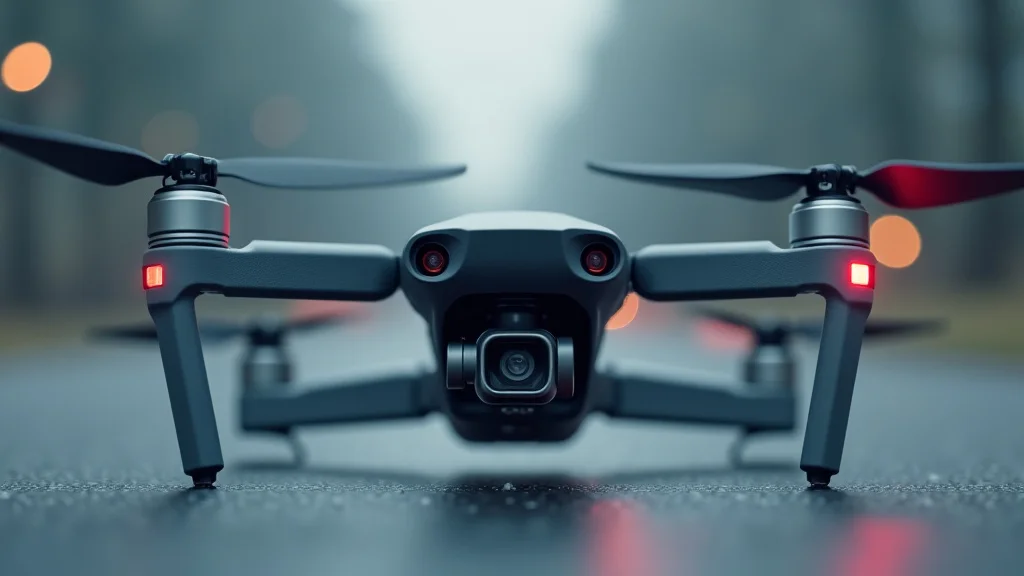
Picture this: you’re at a family picnic, and suddenly, a sleek, humming machine hovers overhead, capturing breathtaking aerial shots of the event. That’s the magic of drones! But have you ever wondered what makes these flying marvels tick? From the tiny motors to the advanced cameras, the drone hardware is a fascinating field. This guide will explore the essential components, their functions, and how they work together to create incredible aerial experiences. You’ll gain a solid grasp of how these devices operate, allowing you to appreciate the technology behind every flight. By the end, you’ll know exactly what parts are involved in flying a drone and how each component works.
Key Takeaways
- Learn about the key components of drone hardware, including the frame, motors, and propellers.
- Discover the functions of the flight controller, GPS, and communication systems.
- Explore the different types of cameras and sensors used in drones.
- Understand the importance of batteries and their impact on flight time.
- Explore various applications of drones.
- Get some suggestions on selecting the right drone.
Understanding Core Drone Hardware
The foundation of any drone is its core hardware. This includes the frame, motors, propellers, and flight controller, all working in unison to enable flight. These components are the building blocks, providing structural integrity, power, and control. This section will break down each element, explaining its role in the drone’s overall performance. From the sturdy frame that keeps everything together to the powerful motors that lift the drone into the air, you will have a good idea how these components function.
The Drone Frame and its Significance
The drone’s frame is the structural backbone, often crafted from lightweight yet durable materials such as carbon fiber or reinforced plastics. It houses and protects the internal components from the elements and impacts. The design of the frame impacts a drone’s stability, agility, and overall flight characteristics. Frame design considerations include the size, shape, and weight distribution. For example, a racing drone prioritizes aerodynamics with a compact frame, offering speed and responsiveness. In comparison, a photography drone, may prioritize stability, featuring a larger frame for camera stabilization. Frame design choices are all about making the best drone for the job.
- Material Choices: Frame materials are selected for their strength-to-weight ratio. Carbon fiber is very strong, making it ideal for high-performance applications.
- Design Impact: Frame design affects flight performance. A wide frame can lead to better stability, while a narrow design can improve agility.
- Durability Considerations: Frames are built to withstand crashes and rough handling. They must be able to protect internal components.
- Weight: A lighter frame improves flight time and maneuverability. Reducing the weight is an essential factor.
Motors and Propellers: Powering Flight
Motors and propellers are the heart of a drone’s propulsion system. They convert electrical energy into mechanical energy, generating the thrust needed for lift and movement. Motors are typically brushless DC motors (BLDC), providing efficiency and long life. Propellers, or props, are designed to generate lift by pushing air downwards. The motor’s RPM, combined with the propeller’s pitch and diameter, determines the thrust produced. Understanding how these parts interact is key to a drone’s capabilities. Choosing the right motors and props ensures flight performance meets specific needs.
- Motor Types: BLDC motors are preferred for their efficiency and durability. They are reliable and do not wear out easily.
- Propeller Design: Propellers come in various sizes and shapes, affecting lift and efficiency. The shape can influence things like speed or noise.
- Motor and Propeller Matching: Compatibility is crucial for performance. The motor’s KV rating (RPM per volt) should match the propeller’s size.
- Thrust and Lift: The relationship between motor speed, propeller design, and thrust is critical for flight. Getting this right is essential.
The Flight Controller: The Drone’s Brain
The flight controller is the central processing unit (CPU) of a drone, interpreting commands from the remote control and managing all the other components. It processes data from sensors like the gyroscope, accelerometer, and barometer to maintain stability, altitude, and orientation. The flight controller uses algorithms to adjust motor speeds in real time, compensating for wind, changes in altitude, and other disturbances. Advanced flight controllers provide features like GPS-guided flight, return-to-home functionality, and obstacle avoidance. The flight controller’s performance is fundamental to how a drone flies.
- Sensor Integration: Flight controllers combine data from various sensors to provide accurate flight control. This enables stable flight.
- PID Control: Proportional-Integral-Derivative (PID) control is a core algorithm used to maintain stability and make adjustments.
- Firmware Updates: Firmware updates can improve performance and add new features. Keeping the flight controller updated is important.
- Flight Modes: Flight controllers offer multiple flight modes, such as stabilized, acrobatic, and GPS-assisted, providing different flying experiences.
Essential Drone Components and Their Functions
Beyond the core components, a drone includes several other key elements that enhance its functionality. These include the battery, the communication system, the GPS, and various sensors. These components work together to ensure a drone’s safety and capability. From the battery that powers the flight to the GPS that enables navigation, these components are essential to a great flying experience.
The Battery: Powering the Flight
The battery is the energy source for the drone, directly influencing flight time. Most drones use lithium polymer (LiPo) batteries, chosen for their high energy density and lightweight design. Battery capacity is measured in milliampere-hours (mAh), which determines how long the drone can fly on a single charge. Factors affecting battery performance include temperature, discharge rate, and battery age. Always charge and maintain batteries as per the manufacturer’s recommendations for safety and longevity. Proper battery care can increase the flight time and overall lifespan of your drone.
- LiPo Technology: LiPo batteries are used for their high energy density and lightweight design. They are the best choice.
- Battery Capacity and Flight Time: Higher capacity batteries typically provide longer flight times. But, this can also increase the drone’s weight.
- Charging and Maintenance: Correct charging procedures and proper storage increase battery life and safety. Using a smart charger is recommended.
- Battery Health: Over time, batteries degrade. Monitoring battery health is important for safety and flight performance.
The Communication System: Remote Control
The communication system allows the pilot to control the drone and receive data from it. This system generally involves a transmitter (the remote control) and a receiver on the drone. Modern drones use radio frequencies, such as 2.4 GHz or 5.8 GHz, for communication. These frequencies transmit control signals and real-time data, like video and telemetry. Range, latency, and interference resistance are essential factors to consider when choosing a communication system. Ensure that the communication system has good transmission quality for a smooth flying experience.
- Frequency Bands: 2.4 GHz and 5.8 GHz bands are common for remote control. These are useful for communication.
- Range and Reliability: The range and reliability of the communication system determine how far and safely you can fly the drone.
- Latency: Low latency is important for responsive control. You want to avoid any delays in control.
- Antenna Design: Antenna design affects range and signal quality. Good antenna design improves the flying experience.
GPS and Navigation Systems
GPS (Global Positioning System) is critical for navigation and autonomous flight. It allows the drone to determine its precise location and fly pre-programmed routes. The GPS receiver on the drone receives signals from multiple satellites to calculate its position. This data is used by the flight controller to maintain position, return home, and perform other automated maneuvers. Additional navigation systems, such as GLONASS and BeiDou, provide added precision and redundancy. These navigation tools enable precise flight control.
- GPS Functionality: GPS provides location data. This is an essential component.
- Return-to-Home: Most drones can automatically return to their take-off location using GPS. This feature is great for safety.
- Waypoints: Many drones can follow pre-set flight paths using waypoint navigation. These provide enhanced flight control.
- Accuracy and Reliability: GPS accuracy depends on signal strength and the number of satellites in view. You can rely on this technology for navigation.
Sensors: Enhancing Drone Capabilities
Drones are fitted with various sensors to enhance their capabilities. Common sensors include accelerometers, gyroscopes, barometers, and magnetometers. These sensors provide data about the drone’s position, orientation, and environmental conditions. Advanced drones may incorporate additional sensors like ultrasonic sensors and vision sensors for obstacle avoidance and improved stability. These sensors work together to provide flight data that provides a safe and smooth experience.
- Accelerometer: Measures acceleration and movement in all three axes. Useful for stability.
- Gyroscope: Measures angular velocity. This ensures orientation data.
- Barometer: Measures air pressure to determine altitude. This is used in altitude control.
- Magnetometer: Measures the Earth’s magnetic field to help with orientation. This helps you figure out where you are going.
Camera Systems and Payload Options
The camera is one of the most prominent features of many drones, enabling aerial photography and videography. The camera system can vary widely, from built-in cameras to modular systems that allow the user to mount different cameras. This section will explore the types of cameras, payloads, and the factors affecting image quality. This is an essential component of professional and hobbyist drones.
Types of Drone Cameras
Drone cameras come in various types, depending on their intended use. Integrated cameras are compact and lightweight, ideal for recreational use. These cameras are often mounted on a gimbal to stabilize the video. More advanced drones support interchangeable cameras, which allow users to mount professional-grade cameras for high-quality images and video. The choice of camera depends on the desired quality, the specific features, and the budget. The camera system is a key part of any drone.
- Integrated Cameras: These are built-in cameras, offering ease of use and convenience. They’re good for beginners.
- Modular Systems: These systems allow for interchangeable cameras. This provides flexibility.
- Image Sensor Size: Larger image sensors capture more light and detail, which improves image quality. Size matters.
- Video Resolution and Frame Rate: Higher resolution and frame rates provide more detailed video. This is great for professional work.
Gimbals: Stabilizing the Shot
Gimbals are essential for stabilizing the camera, removing unwanted motion and vibration during flight. These devices use motors and sensors to counteract the drone’s movement, keeping the camera stable. The number of axes a gimbal has (typically two or three) determines its ability to stabilize the camera along different axes (pitch, roll, and yaw). A good gimbal provides smooth, professional-looking footage, even in windy conditions. Gimbal technology provides smooth, clear visuals.
- Two-Axis Gimbals: These stabilize the camera on pitch and roll axes. This is a common setup.
- Three-Axis Gimbals: These stabilize the camera on pitch, roll, and yaw axes. This is ideal for professional quality.
- Stabilization Techniques: Gimbals use brushless motors and IMU (Inertial Measurement Unit) sensors for stabilization. This is all automated.
- Impact on Video Quality: Gimbals dramatically improve the smoothness and professionalism of aerial footage. High quality gimbals are essential.
Payload Options and Considerations
Payload refers to the additional equipment a drone carries beyond its core components, such as cameras, sensors, and delivery packages. The choice of payload depends on the drone’s intended application. Agricultural drones carry specialized sensors for crop monitoring. Delivery drones have compartments for transporting goods. The payload capacity of a drone is critical, as it affects flight time and maneuverability. Payload selection and capacity are important for performance.
- Payload Capacity: The maximum weight a drone can carry. This is an important specification.
- Payload Compatibility: Ensure the drone can physically and electronically support the payload. This avoids compatibility problems.
- Power Requirements: Heavier payloads often require more battery power, which can reduce flight time. Plan accordingly.
- Specialized Payloads: Drones can carry a range of specialized equipment, such as thermal cameras, LiDAR sensors, and delivery containers. These provide specific solutions.
Choosing the Right Drone Hardware
Selecting the right drone depends on your needs, intended applications, and skill level. Before making a decision, consider factors such as flight time, camera quality, range, and budget. This section will offer guidance to help you choose the best drone hardware for your requirements. This process helps narrow your choices and find the perfect drone.
Factors to Consider Before Purchasing
Before purchasing a drone, consider several factors to ensure it meets your requirements. Flight time is an important aspect for many users. Camera quality dictates the quality of photos and videos. Range determines the area over which you can fly the drone. Finally, budget is a practical consideration. Evaluating these factors allows you to narrow down your choices and select a drone that fits your needs.
- Flight Time: Consider how long you need the drone to fly on a single charge. This can vary quite a bit.
- Camera Quality: Determine the necessary resolution, frame rate, and sensor size. The camera will influence your photos and videos.
- Range and Signal Reliability: Ensure the drone has sufficient range and a reliable signal. You want to make sure the drone works well.
- Budget: Set a budget and explore drones within your price range. Keep this in mind!
Drone Hardware Comparison: Features and Specifications
| Feature | Entry-Level Drone | Mid-Range Drone | Professional Drone |
|---|---|---|---|
| Flight Time | 15-20 minutes | 25-30 minutes | 30-40 minutes |
| Camera Resolution | 1080p | 4K | 4K or higher, with advanced features |
| Gimbal | 2-axis | 3-axis | 3-axis, advanced stabilization |
| Range | Up to 1 km | Up to 5 km | Up to 10 km or more |
| Sensors | Basic GPS | GPS, Obstacle Avoidance | GPS, Obstacle Avoidance, various sensors |
This comparison table outlines the specifications of drones across three levels: entry-level, mid-range, and professional. The entry-level drones are usually designed for beginners, while the mid-range devices offer a balance of features and cost. Professional models are equipped with high-end technology. Remember that these specifications can vary depending on the model and the manufacturer.
Upgrading and Maintaining Drone Hardware
Upgrading and maintaining your drone keeps it flying at peak performance and extends its lifespan. Regular maintenance, such as checking propellers and batteries, helps prevent problems. Upgrading components, such as batteries or cameras, can improve the drone’s capabilities. Understanding how to maintain and upgrade your drone ensures many enjoyable flights. Your drone will continue to serve you for years with proper maintenance.
- Regular Maintenance Checks: Regularly inspect propellers, motors, and the frame for any damage. Check for any issues.
- Battery Care and Replacement: Charge and store batteries correctly. Always replace them when they show signs of degradation.
- Firmware Updates: Keep the drone’s firmware up to date. This ensures peak performance.
- Component Upgrades: Consider upgrading batteries, cameras, or other components to improve performance and add new features. This keeps your drone up-to-date.
Common Myths Debunked
Misconceptions about drones are common. This section clarifies some prevalent myths, providing correct information to clear up confusion. It’s time to separate fact from fiction and gain a clear, factual picture of drone hardware.
Myth 1: Drones are Illegal Everywhere
Drones are subject to regulations, but they are not illegal everywhere. Legal restrictions vary by location. The United States, for example, has regulations from the Federal Aviation Administration (FAA) that govern drone flight. These rules cover things like where you can fly, how high you can go, and the requirement to keep the drone within your line of sight. Following these rules is key. You need to always check and adhere to local laws.
Myth 2: Drones are Always Easy to Fly
While modern drones are designed with ease of use in mind, they do require some skill to operate. New pilots need time to practice and develop their abilities. Features such as automatic takeoff and landing simplify the process. However, pilots need to be familiar with flight controls, understand safety protocols, and be ready to respond to unexpected situations. Practice is important! Taking your time with your drone builds your experience.
Myth 3: High-End Drones Have the Best Battery Life
Battery life is influenced by many factors, including the drone’s weight, the size of its motors, and how it is used. High-end drones often come with larger batteries, providing longer flight times than beginner models. However, the more powerful motors and features on high-end devices can also draw more power. This can affect flight time. Battery technology continues to develop, with new advances. Some drones are being designed for maximum flight time.
Myth 4: Drones are Unsafe and Pose a Constant Threat
Drones, like any technology, can be risky if misused. Many safety features are built into modern drones, such as GPS return-to-home functionality and obstacle avoidance. The main threats are usually user errors, such as flying in windy conditions, malfunctioning or losing control. By following safety guidelines and being a responsible drone operator, you can significantly reduce these risks. Safety is crucial for everyone.
Myth 5: Drone Cameras Always Capture Perfect Images
While drone cameras have come a long way, they aren’t always perfect. Picture quality is influenced by several elements, including sensor size, resolution, and the conditions. High winds, vibration, and low light conditions can affect image quality. For professional-quality images and video, high-end cameras and gimbals are essential. You also need good technique. Understanding these limitations is important.
Frequently Asked Questions
Question: What is the main difference between a drone and an RC (radio-controlled) airplane?
Answer: Drones are equipped with advanced flight stabilization systems, making them easier to fly and control. RC airplanes require more skill and experience to pilot, often requiring constant adjustment.
Question: How do I know if I need to register my drone?
Answer: Drone registration is typically required by government agencies, like the FAA in the US, depending on the drone’s weight. Regulations can change, so check the latest rules to see what applies to you.
Question: What is the average flight time of a drone?
Answer: Average flight times vary, but most consumer drones range from 20 to 30 minutes on a single battery charge. High-end drones can sometimes fly for over 40 minutes.
Question: Are there any flying restrictions for drones?
Answer: Yes, drone operation is often limited around airports, government buildings, and other restricted areas. These restrictions aim to avoid danger and safeguard privacy. Always check local laws.
Question: How can I improve the quality of my drone’s videos?
Answer: You can improve video quality by flying in good light conditions, keeping the drone stable with a gimbal, and using the highest available resolution and frame rates your drone supports.
Final Thoughts
Exploring the world of drone hardware offers a glimpse into a world of technological advancement. From the essential components to the advanced functionalities, drones represent the convergence of engineering, technology, and creativity. By understanding the core elements and their functions, you’ll be well-prepared to appreciate, select, and maintain these amazing machines. As technology advances, drones will likely continue to improve. Embrace the future of flight, and keep exploring!